

As Applying Gets Easier, Attention Becomes More Valuable
Technology has reduced the friction involved in finding and applying for jobs. That shift may be increasing the value of something far more difficult to automate: paying attention.
A few weeks ago, I applied for a senior leadership position and, like many professionals navigating today’s job market, I used AI throughout parts of the process. It helped me evaluate how my background aligned with the role, refine application materials, and think through how to position my experience. The technology was useful because it reduced the amount of time spent on administrative tasks and allowed me to focus on the substance of the opportunity.
After submitting my application, I took a few minutes to review the recruiter’s LinkedIn profile. I wasn’t looking for a referral, a shortcut, or a way to gain an advantage in the hiring process. I was simply curious about the person behind the posting.
As I read through her profile, I noticed volunteer work that connected to causes my family has been involved with for years. I also noticed a few shared geographic connections that resonated with me on a personal level. None of those details had anything to do with the role itself, but they gave me a genuine reason to reach out.
The message I sent was brief and personal. Rather than asking for a referral or requesting an update on my application, I introduced myself and mentioned the connections I had noticed. What followed was one of the most valuable conversations I have had during my current job search.
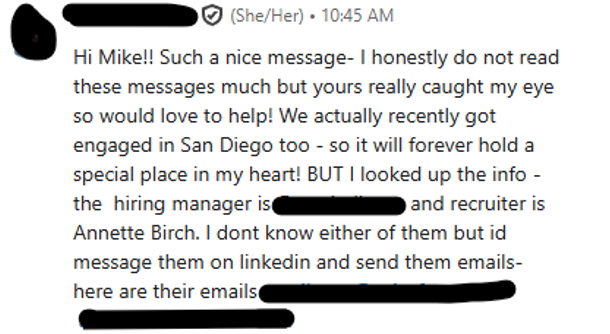
The recruiter responded thoughtfully and generously. She provided additional context about the role, shared observations about how my experience might be viewed by the hiring team, and offered candid feedback about both my strengths and potential gaps. Some of her observations reinforced areas where my background aligned well with the position. Others highlighted experiences that hiring leaders might consider important but that were less visible in my own career history.
Whether that conversation has any impact on the eventual hiring decision is impossible to know. What struck me, however, was that the most valuable part of the experience occurred after the application had already been submitted.
That realization led me to think differently about the relationship between AI and the job search process.
AI Has Made Applying Easier
There is little debate that AI has reduced the friction associated with applying for jobs. Candidates can now use AI tools to tailor resumes, draft cover letters, analyze job descriptions, prepare for interviews, and conduct company research in a fraction of the time those activities once required.
For job seekers, this is largely a positive development. Searching for a new role can feel like a second job, particularly for professionals balancing family responsibilities and full-time work. Tools that reduce repetitive tasks allow candidates to spend more time evaluating opportunities and preparing for meaningful conversations.
The challenge is that these tools are available to nearly everyone.
As AI becomes more integrated into the hiring process, many of the activities that once differentiated candidates become easier to replicate. A polished resume remains important, but polished resumes are becoming increasingly common. Customized application materials still matter, but they are no longer unusual. The baseline quality of applications is likely to rise as candidates gain access to tools that help them present themselves more effectively.
When everyone can move faster, speed becomes less of a competitive advantage.
The Difference Between Efficiency and Attention
One of the unintended consequences of AI is that it encourages efficiency. In many situations, efficiency is exactly what we want. We want to complete routine tasks faster, reduce unnecessary effort, and remove barriers that prevent us from focusing on higher-value work.
Yet efficiency and attention are not the same thing.
The interaction with the recruiter was valuable because it required attention rather than efficiency. Taking the time to read a profile carefully, notice details that reflected shared interests and experiences, and craft a message based on genuine curiosity created a very different interaction than a generic networking request would have produced.
What stood out to me was not that she responded. It was the quality of the response.
Her willingness to offer thoughtful feedback suggested that she viewed the interaction as a conversation between professionals rather than another request arriving in her inbox. That distinction matters because most people can recognize the difference between someone who is genuinely interested in connecting and someone who is simply trying to advance an application.
As technology improves, that distinction may become even more important.
What Networking Often Gets Wrong
Career advice frequently treats networking as a transaction. Professionals are encouraged to connect with hiring managers, seek referrals, and expand their networks because those activities are believed to improve hiring outcomes.
While there is certainly value in building professional relationships, the advice often overlooks what makes those relationships meaningful in the first place.
The strongest professional connections rarely begin with a request. More often, they begin with curiosity. Someone notices a shared interest, a common experience, or a piece of work they genuinely admire. A conversation follows, and over time a relationship develops.
That dynamic is easy to forget when networking becomes another task on a job search checklist.
In this case, the conversation happened because I paid attention to details that had nothing to do with the role itself. Those observations created an opening for a genuine exchange that ultimately provided far more value than a referral request or application update ever could have.
A Skill That AI Cannot Automate
There is ongoing debate about whether reaching out to recruiters or hiring managers after applying actually improves a candidate’s chances of being hired. The honest answer is that there is no universal rule. Some people welcome those conversations, while others prefer to let the process unfold through formal channels.
The more interesting question is not whether outreach works. It is whether the outreach demonstrates genuine interest in another person.
AI can help candidates identify opportunities, improve application materials, and prepare for interviews. What it cannot do is replace the judgment required to recognize meaningful connections or the sincerity required to build professional relationships.
As applying for jobs becomes easier and faster, those human qualities may become more noticeable rather than less.
The technology that supports our careers will continue to improve. The ability to pay attention, show curiosity, and engage thoughtfully with other people remains entirely our own.